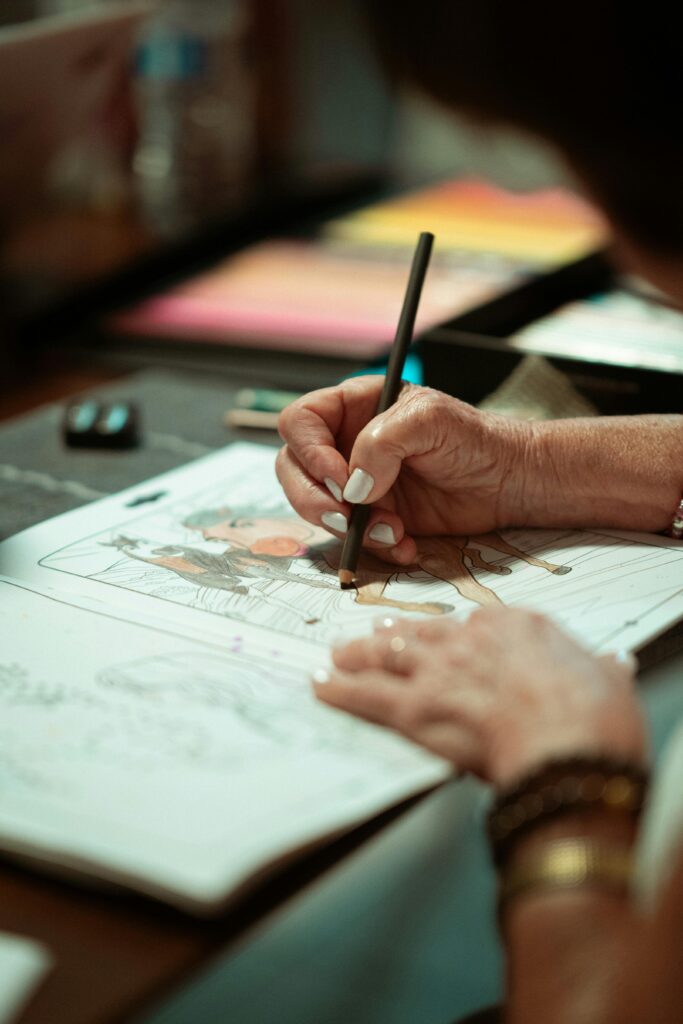
Anxiety affects millions of adults daily. Racing thoughts, worry spirals, and that tight feeling in your chest can make even simple tasks feel overwhelming. While therapy and medication remain important treatment options, researchers have discovered something surprising: the simple act of coloring can measurably reduce anxiety levels.
This isn’t just anecdotal comfort. Multiple scientific studies conducted over the past decade demonstrate that adult coloring books create real, measurable decreases in anxiety symptoms. Understanding how and why this works can help you use coloring more effectively as part of your mental wellness toolkit.
What Research Reveals About Coloring and Anxiety
A groundbreaking study published in 2020 examined emergency department patients experiencing anxiety. Researchers provided some patients with adult coloring books while others received standard care. After just two hours of coloring, participants showed an average anxiety score decrease of 3.7 points on standardized measurement scales. That represents a clinically significant reduction in anxiety symptoms.
Another study focusing on undergraduate students divided participants into three groups: one colored mandala designs, another colored plaid patterns, and a third received blank paper for free drawing. Both the mandala and plaid groups experienced lower anxiety levels than the free drawing group. However, the mandala group showed the most significant anxiety reduction, suggesting that structured, complex patterns provide the greatest benefit.
Research conducted with 180 participants comparing mindful coloring to traditional meditation found both practices equally effective at reducing anxiety. This finding is particularly important because it means people who struggle with sitting meditation have an equally effective alternative that feels more accessible and enjoyable.
How Coloring Calms Your Anxious Mind
Several neurological and psychological mechanisms explain why coloring works so effectively against anxiety.
Focus and Attention Shifting
Anxiety thrives on rumination. Your mind loops through worries, worst-case scenarios, and what-if thinking. Coloring interrupts this cycle by requiring focused attention on a single task. Choosing colors, staying within lines, and creating pleasing combinations demands enough concentration to redirect your thoughts away from anxious rumination without requiring so much mental effort that it becomes stressful itself.
This cognitive disruption allows your nervous system to shift from the sympathetic “fight or flight” response into the parasympathetic “rest and digest” mode. Your heart rate slows. Your breathing deepens. Muscle tension releases. These physiological changes directly counteract the physical symptoms of anxiety.
Creating a Meditative State
Coloring complex geometric patterns, particularly mandalas and intricate designs, induces a light meditative state. Unlike traditional meditation, which requires clearing your mind of thoughts (notoriously difficult for anxious people), coloring meditation keeps your conscious mind gently occupied. This allows deeper relaxation without the frustration many people experience when trying to “empty” their minds.
The repetitive nature of coloring motions—the back-and-forth strokes, the circular movements, the careful attention to small spaces—creates a rhythmic pattern similar to breathing exercises used in anxiety management. Your body recognizes these patterns and responds with increased calm.
Activating the Relaxation Response
Dr. Herbert Benson, who first described the “relaxation response,” identified specific physiological changes that occur during activities like meditation, prayer, and yes, coloring. Heart rate decreases. Blood pressure lowers. Stress hormones like cortisol decline. Meanwhile, feel-good neurotransmitters including serotonin and dopamine increase.
Coloring activates this relaxation response through multiple pathways. The visual focus, the tactile sensation of holding colored pencils or markers, the creative engagement, and the sense of accomplishment all contribute to triggering these beneficial physiological changes.
Providing Control and Predictability
Anxiety often stems from feeling out of control. Life circumstances feel overwhelming and unpredictable. Coloring offers a rare opportunity for complete control in a safe, low-stakes environment. You decide which colors to use. You control how much time to spend on each section. You determine when a page is finished.
This experience of control, even in something as simple as coloring, helps rebuild your sense of agency. The predictable nature of coloring—you know exactly what will happen when you put pencil to paper—provides welcome relief from anxiety’s constant uncertainty.
Mindful Coloring Amplifies the Benefits
While coloring alone reduces anxiety, researchers found that combining coloring with mindfulness practices creates even stronger effects. A study involving 72 university students compared standard coloring to mindful coloring with specific instructions.
The mindful coloring group received guidance on relaxing their body, focusing attention on the sensations of coloring, and gently redirecting wandering thoughts. This group reported significantly lower anxiety and increased focus compared to the regular coloring group.
Another study with 35 UK teachers found that practicing mindful coloring daily for five days reduced stress and increased resilience compared to teachers who continued their normal routines. The combination of coloring activity with intentional mindfulness created measurable improvements in just one workweek.
Making Coloring Work for Your Anxiety
Based on research findings, certain approaches maximize anxiety relief from coloring:
Choose Complex, Structured Patterns
Studies consistently show that intricate geometric designs, mandalas, and detailed patterns provide greater anxiety reduction than simple images or free drawing. The complexity requires enough focus to interrupt anxious thoughts while the structure provides comforting boundaries.
Practice Mindful Awareness
Before starting, take three deep breaths. Notice the weight of your coloring tool in your hand. Pay attention to the physical sensation of color flowing onto paper. When your mind wanders to worries, gently guide it back to the present moment and the task at hand.
Create Regular Practice
Research with teachers showed benefits from just five consecutive days of practice. Consistency matters more than duration. Even 10 to 15 minutes daily provides measurable anxiety reduction over time.
Remove Performance Pressure
Coloring reduces anxiety partly because it removes the pressure to create something perfect or original. The design already exists. You simply add color. There’s no right or wrong way to complete a page. This freedom from judgment allows genuine relaxation.
Beyond Temporary Relief
While coloring provides immediate anxiety relief during the activity itself, regular practice creates longer-term benefits. Studies show that people who color regularly report improved emotional regulation, increased resilience to stress, and better overall mood even when not actively coloring.
The practice essentially trains your nervous system to move more easily from anxious states into calm ones. You develop a reliable tool you can access whenever anxiety rises. Unlike medication that requires prescriptions or therapy that requires appointments, your coloring book remains available whenever you need it.
Adult coloring books aren’t meant to replace professional mental health care for clinical anxiety disorders. However, research clearly demonstrates they offer a scientifically validated, accessible, and enjoyable method for reducing everyday anxiety and supporting overall emotional wellness. The colored pencils in your hand hold more power than you might imagine.